
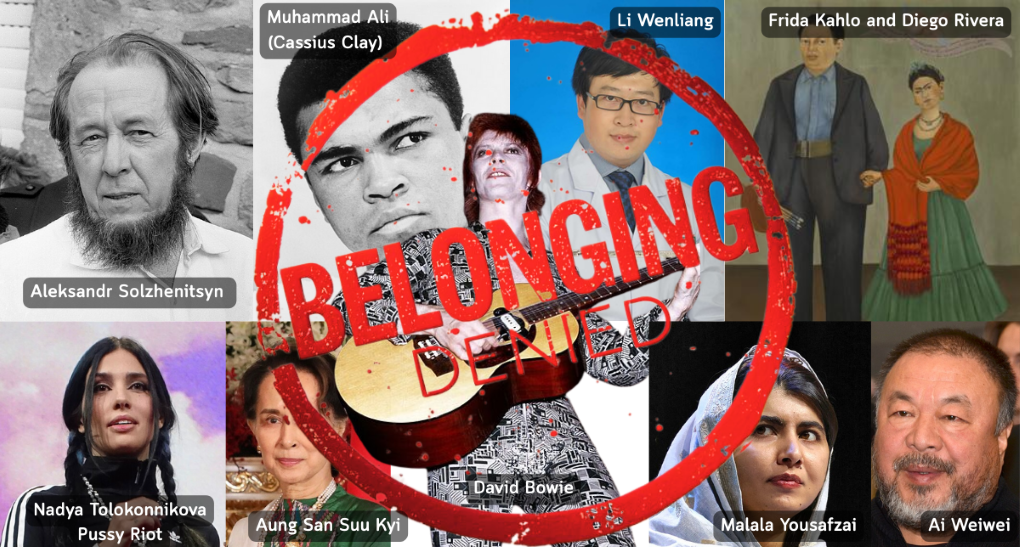
In this post I've compiled a list of real world-examples of people who've been driven toward the edge of the Circle of Belonging for a variety of reasons.
I'm doing so to illustrate just how pervasive this phenomenon is but there's another important thing to learn from these examples and that's how rare it is for the vast majority of people to risk isolation, rejection and being ostracized, given the price we know we'll pay.
The list was compiled with assistance from an AI and the images as well as some of the text is copied from Wikipedia who provide a remarkable service by making this community sourced information available to us while taking care to ensure that the quality is maintained and is freely available. (Please donate to Wikipedia if you are in a position to do so.)
- To avoid rejection, isolation and ostracization we limit our speech and avoid saying things that could antagonize others in the group
- We limit our actions and avoid doing things that would antagonize others in the group
- We limit our beliefs and avoid believing things that might antagonize others in the group
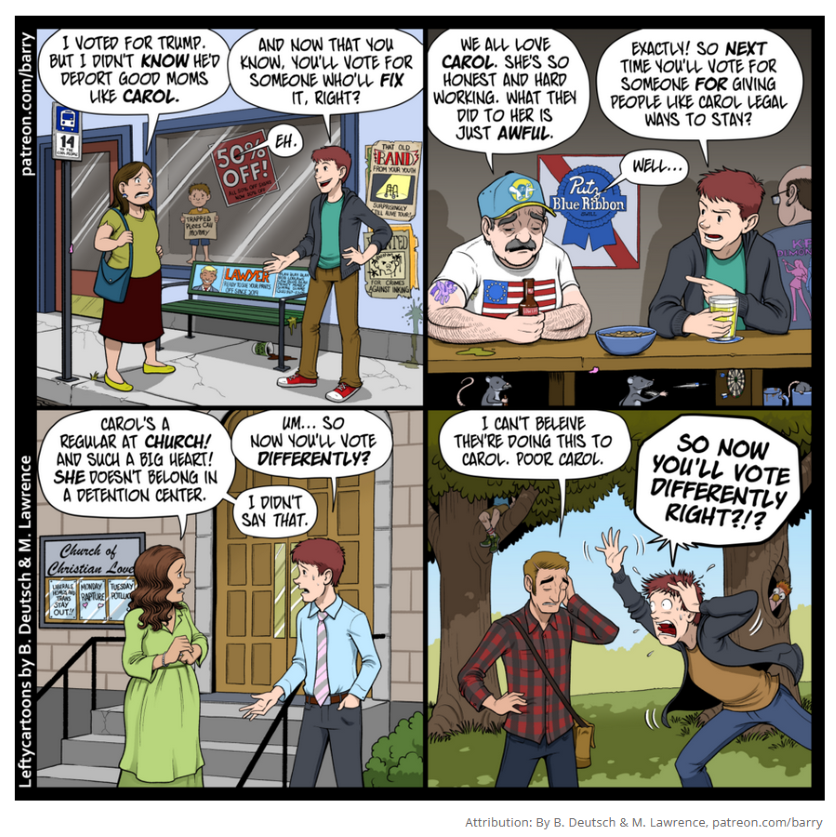
- We are careful to avoid voting for someone or something who does not have the approval of the group that could lead to rejection, isolation and ostracization.
- We are careful to avoid becoming attracted to, or falling in love with someone who does not have the approval of the group that has a potential to ostracize us.
Limit Speech
Aleksandr Solzhenitsyn wrote openly about the Soviet labour camps he survived. His manuscripts circulated secretly, bypassing official censorship. When his book “The Gulag Archipelago” appeared abroad, party loyalists saw betrayal. He was denounced in the press as a slanderer of the motherland. Soon after, he was stripped of citizenship and expelled from the USSR.
Limit Actions
Muhammad Ali (Cassius Clay) refused induction into the U.S. Army during the Vietnam War. He cited his conscience and opposition to the conflict. Immediately, boxing commissions stripped him of his titles. Promoters who once courted him cut off contracts. He was barred from the ring at the height of his career. In sporting circles, some peers publicly condemned his refusal. Television commentators labelled him unpatriotic and cowardly. Fans who once cheered him now booed his name in certain arenas.
Limit Beliefs
Li Wenliang, an ophthalmologist in Wuhan, shared messages about a new illness. He warned fellow doctors in a private chat group. Screenshots spread, and authorities summoned him for “rumour-mongering.” He was forced to sign a statement admitting to “making false comments.” His early warnings were silenced as a disruption to social order. After his reprimand, colleagues were told not to repeat his claims. Official announcements framed his information as misleading. Some hospital staff avoided mentioning his name in meetings. He became a quiet example of what happened to those who spoke too soon. The pressure taught others to keep doubts to themselves. When he later fell ill, his story leaked out more widely. The illness he’d warned about was SARS-CoV-2, the disease that killed him was COVID 19.
Vote to Avoid Jeopardizing Belonging
On internal committees Andrei Dmitrievich Sakharov refused to rubber-stamp weapons projects. He voted against certain proposals that others approved unanimously. Colleagues whispered that his dissent would attract dangerous attention. Some asked him not to attend meetings, to avoid awkward splits. In effect, his seat was present but his voice unwelcome. When scientific bodies endorsed official state positions, he withheld his signature or voted in opposition. These symbolic acts marked him to party overseers. Members who shared his doubts kept them off the record. His isolated votes created an invisible boundary around him. As state honours were planned, his dissent clouded deliberations. Committees debated whether he still represented the Soviet scientific community. Invitations to be part of high-profile delegations were rescinded. Voting differently from the collective became a permanent mark. His professional home turned into a place of formal inclusion and informal exclusion.
Careful who we are attracted to, or fall in love with
Aung San Suu Kyi married Michael Aris, a British academic. Their cross-cultural union drew quiet criticism from some Burmese nationalists. Suspicion of foreign influence lingered in political circles. Certain traditionalists questioned her suitability as a national figure. Her marriage formed a subtle barrier with parts of the establishment. When she returned to Burma and entered politics, her husband remained abroad, teaching in the West. Authorities used his foreign status as a pretext for restrictions. They denied him visas, preventing regular visits. Her family life became a casualty of political isolation. During her long periods of house arrest, she faced the choice between leaving to see him or staying in Burma. The regime made clear that departure would mean exile. She remained, effectively separating herself from her husband and sons.
Frida Kahlo and Diego Rivera formed a turbulent partnership that defied conventional norms. Their open affairs and political activism unsettled conservative circles in Mexico. Neighbours complained about constant visitors and radical discussions. Society hostesses debated whether to include them on guest lists. The couple often found themselves welcomed in some salons, shunned in others. Some friends chose sides, breaking off contact with one or the other. Gossip columns framed them as scandalous rather than respectable artists. Their romance, as much as their politics, determined who accepted or avoided them.
Conscious of Dressing for Inclusion
As a schoolgirl in Pakistan’s Swat Valley, Malala Yousafzai insisted on wearing her school uniform and carrying books openly. In areas where militants enforced strict dress expectations, her visible attire signalled defiance of their rules for girls. Local extremists marked her as a symbol of unwanted modernity. When threats escalated, neighbours warned her family to be more discreet. Some suggested she stop appearing in public in that uniform. Others avoided being photographed with her, fearing association. Her simple act of dressing for school became a political statement. It separated her from those who complied silently.
David Bowie’s androgynous costumes in the 1970s shocked mainstream audiences. Onstage, he wore glitter, makeup, and flamboyant outfits. Television hosts sometimes struggled to mask their discomfort. Certain venues hesitated to book him, fearing audience backlash. His appearance set him apart from acceptable rock masculinity. In early press interviews, journalists fixated on his clothes. Some papers painted him as a corrupting influence on youth. Parents’ groups urged boycotts of his performances. Radio stations in more conservative regions refused to play his music. The way he dressed became grounds for moral panic.
Choose Carefully What You Eat
Konishiki Yasokichi, a Samoan-born sumo wrestler in Japan, was the first non-Japanese-born wrestler to reach ōzeki, the second-highest possible rank in the sport. During his career, he won the top division championship on three occasions and came very close to becoming the first foreign-born grand champion, or yokozuna. Konishiki balanced traditional chankonabe stew with elements of his own food culture. Some elders viewed his non-Japanese eating habits with suspicion. They feared it undermined the carefully controlled sumo lifestyle. His size and diet became topics of backstage criticism. As he gained prominence, tabloids fixated on his massive meals. They portrayed him as excessive and undisciplined. Traditionalists whispered that foreign appetites did not belong in the ring. Officials questioned whether he embodied the “spirit” of sumo. His diet and body were cited as proof of difference, not belonging.
Don't Support Anyone Your Group Perceives as an Enemy
Ezra Weston Loomis Pound was an American poet and critic, a major figure in the early modernist poetry movement. Working in London as foreign editor of several American literary magazines, he helped to discover and shape the work of contemporaries such as Robert Frost, T. S. Eliot, Ernest Hemingway, and James Joyce. Angered by the carnage of World War I, Pound blamed the war on finance capitalism, which he called "usury". He moved to Italy in 1924 and through the 1930s and 1940s promoted an economic theory known as social credit, wrote for publications owned by the British fascist Oswald Mosley, embraced Benito Mussolini's fascism, and expressed support for Adolf Hitler. After the war, American forces arrested him for treason. Publishers and literary circles struggled with his wartime stance. Many distanced themselves rather than be tainted by association. Confined to a U.S. military camp, he was held outdoors for three weeks in a steel cage. Pound was incarcerated for over 12 years at a psychiatric hospital in Washington, D.C.
Follow and Respect Spoken and Implied Group Rules, Laws, Customs and Symbols
Nadezhda Tolokonnikova (Pussy Riot) joined an unauthorized performance in Moscow’s Cathedral of Christ the Savior. The action violated laws and unwritten rules about political protest in sacred spaces. Authorities charged her with “hooliganism motivated by religious hatred.” State media depicted her as an enemy of tradition and order. She was sentenced to prison, removed from normal society. In the penal colony, guards and inmates treated her as a troublemaker. Her refusal to submit quietly to camp routines provoked reprisals. She staged hunger strikes and wrote letters exposing abuses. Her noncompliance deepened her isolation within the prison system. Upon release, she found herself notorious at home. Some activists welcomed her; many ordinary citizens disapproved. Employers, landlords, and local authorities saw her as a risk. Police attention followed her public appearances. Her defiance of rules left her living in a narrow band between fame and ostracism.
Ai Weiwei consistently challenged Chinese authorities through art and activism. He documented earthquake victims, questioned corruption, and mocked official narratives. Police raided his studio and detained him without formal charges. His name disappeared from domestic media. He was physically present in Beijing, but institutionally erased. Friends and colleagues faced pressure not to associate with him. Some galleries cancelled exhibitions under official hints. Visitors to his studio risked being monitored. He became a magnet for surveillance that others wished to avoid. Social networks quietly thinned around him. After his passport was confiscated, he was restricted from travelling. International invitations piled up, unanswered by necessity. Foreign recognition contrasted with domestic marginalization. Neighbours learned to look away from cameras trained on his doorway. His refusal to obey the rules of silence placed him in a state of ongoing, managed isolation.
Don't Bring Shame & Don't Elicit Shame
Bobby Fischer brought immense prestige to American chess with his 1972 world title. Years later, antisemitic remarks and erratic behaviour emerged in interviews. Chess federations struggled to reconcile his genius with his statements. Promoters hesitated to invite him to public events. He became a source of embarrassment rather than pride. After defying sanctions by playing a rematch in Yugoslavia, he was indicted by U.S. authorities. American chess circles largely lost direct contact with him. He lived abroad, rarely appearing in public. His conduct was viewed as having stained the group he once elevated.
Encouraged To Be Different, But Not Too Different
Elinor Ostrom was an American political scientist and political economist whose work was associated with New Institutional Economics and the resurgence of political economy. Ostrom studied the interaction of people and ecosystems for many years and showed that the use of exhaustible resources by groups of people (communities, cooperatives, trusts, trade unions) can be rational and prevent depletion of the resource without either state intervention or markets with private property. Panels dominated by game theory and rational-choice models looked past her. Some peers advised her to “do more proper theory” to be taken seriously. Invitations to certain elite workshops arrived late or not at all. Her preferred way of doing research set her apart from the reigning style. In 2009, she was awarded the Nobel Memorial Prize in Economic Sciences for her "analysis of economic governance, especially the commons", which she shared with Oliver E. Williamson; she was the first woman to win the prize.
Don't Ever Make the Group Appear/Look Inferior
Tonya Harding’s involvement in the attack on Nancy Kerrigan turned a personal rivalry into an international scandal. The incident made U.S. figure skating look ruthless and ungracious. Federations scrambled to preserve their reputation. She was banned for life from participating in USFSA events. Other skaters refused to be associated with her. Ice shows and tours excluded her from lineups. Sponsors vanished overnight, fearing public backlash. Commentators spoke of her as a cautionary tale. Her name became shorthand for unsportsmanlike conduct. Even years later, attempts at a comeback in other arenas faltered. Reality shows and interviews kept the scandal alive. Skating officials maintained their distance. Fans divided between curiosity and lingering anger. Her role in tarnishing the sport’s image kept her on its outermost edge.
Recap:
- To avoid rejection, isolation and ostracization we limit our speech and avoid saying things that could antagonize others in the group
- We limit our actions and avoid doing things that would antagonize others in the group
- We limit our beliefs and avoid believing things that might antagonize others in the group
- We are careful to avoid voting for someone or something who does not have the approval of the group that could lead to rejection, isolation and ostracization.
- We are careful to avoid becoming attracted to, or falling in love with someone who does not have the approval of the group that has a potential to ostracize us.
Invitation to connect:
Share your thoughts and responses in an email or schedule a no‑obligation one‑on‑one call to discuss how my services can support you, your family, or your organization - advantagesofmediation.ca/contact.
Don't Miss Out On
Original insights and content from Philip Be'er
Challenging your understanding of how humans are 'wired' and why it matters.
Copyright ©Advantages Mediation. All Rights Reserved